Overcoming Localization Challenges in India: A Practical Case Study of Fangshi Robotics in Interior Coating Projects
In July, several intelligent construction projects in India achieved key phased milestones. Facing India's harsh monsoon and heat season, complex cement-mortar base conditions, and tight construction deadlines, Beijing Fangshi Robotics Co., Ltd. (hereinafter referred to as "Fangshi Robotics") established deep partnerships with top Indian developers. Its interior coating robotics series officially entered project sites in May, landing across diverse residential and public building engineering projects.
In this issue, Fangshi Robotics will analyze the robot selection logic across different architectural scenarios through two benchmark projects, demonstrating the field performance of its products in India's diverse construction environments.
High-Temperature Stability & Multi-Scenario Application Challenges
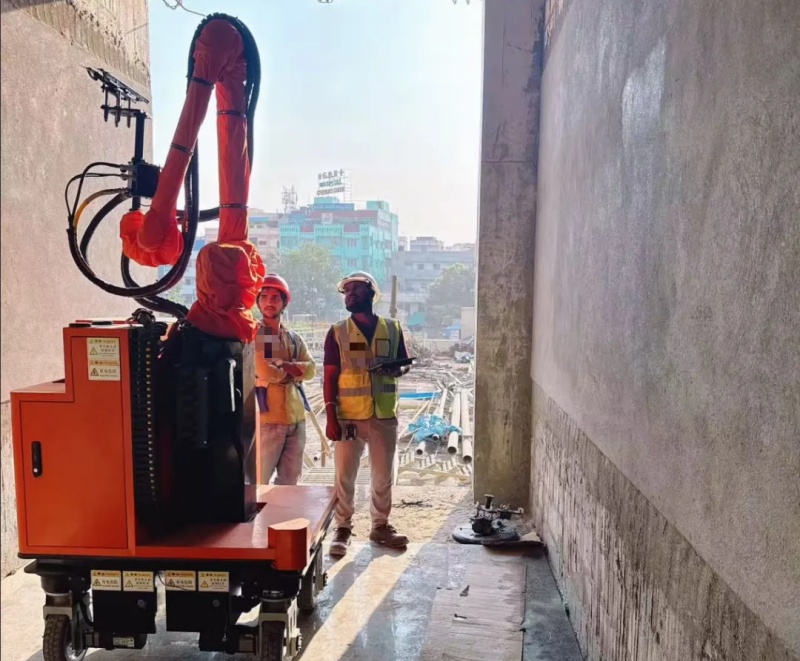
Since May, India has entered a period of relentless high temperatures. Driven by monsoon weather and extreme heat exceeding 40°C, putty and paint dry rapidly. Paired with tight schedules and stringent acceptance standards, these conditions severely test the robots' capacity for continuous operation and long-term stability. Furthermore, cross-border projects feature differing base preparation methods, while narrow hallways in local high-rise buildings set a higher bar for the robots' adaptability to local working conditions.
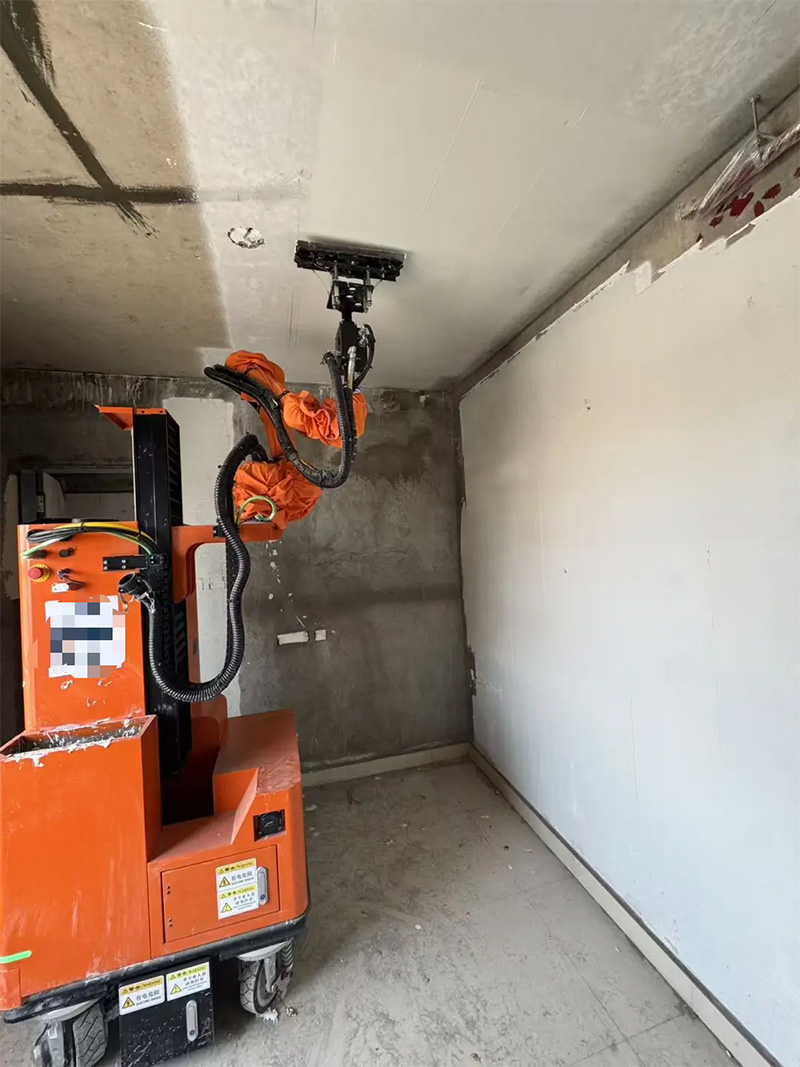
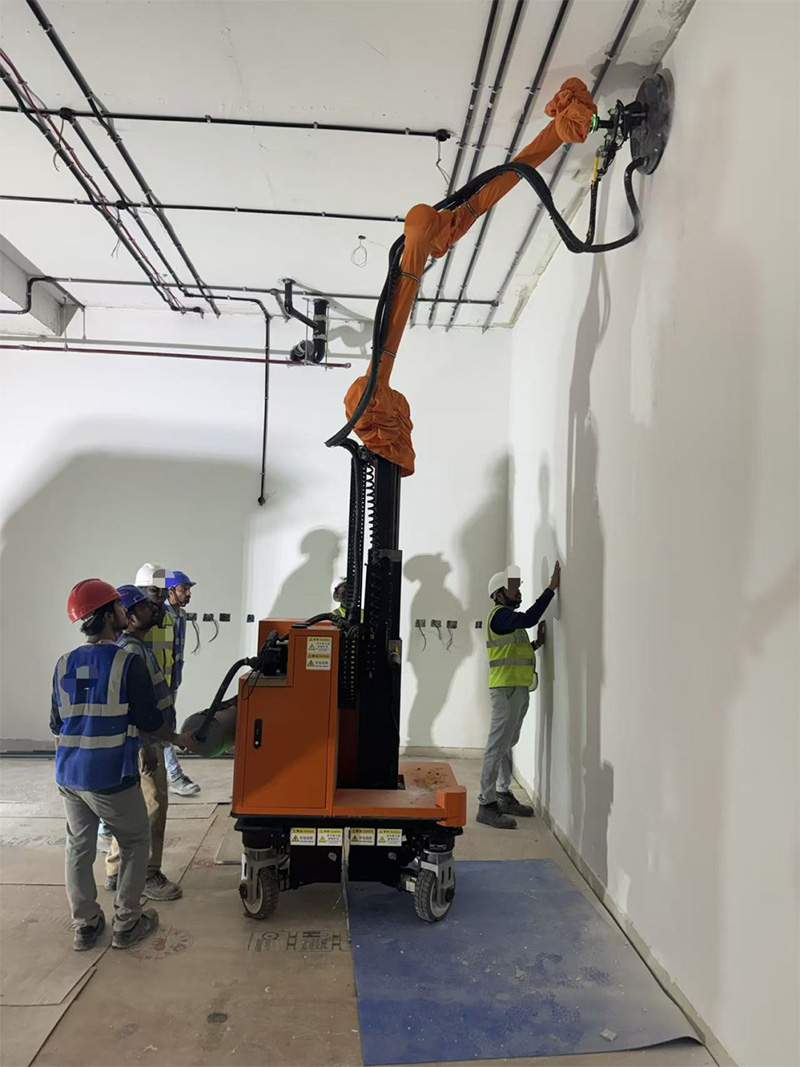
Facing the dual challenges of normalized regional high temperatures and project intelligent upgrades, Fangshi Robotics leverages its cumulative global experience across 15 million square meters of multi-scenario construction to build a mature "Embodied AI + Large Model" solution. This effectively overcomes the industry challenge of continuous, stable operation under extreme weather conditions, helping local partners deliver high-quality buildings.
During the interior wall coating construction stage, to accommodate spatial differences across project scenarios, Fangshi Robotics introduced two product configurations to clients: the Residential Edition (Spray-scraping & Sanding Integrated Robot 433D) and the Basement & Public Building Edition (Spray-scraping & Sanding Integrated Robot 445E). Below is the selection logic illustrated through two real-world projects:
Navi Mumbai Core Residential Project
Located in the central CBD of Belapur, Navi Mumbai, this landmark project covers a total area of over 170,000 square meters as a prime high-rise residential complex. Featuring a clear interior height of 2.7 meters, compact floor plans, and numerous blind spots along narrow corridors and balconies, the project faced restricted movement and confined indoor passage conditions. To navigate these constraints, the project deployed the Residential Edition "Spray-scraping & Sanding Integrated Robot 433D".
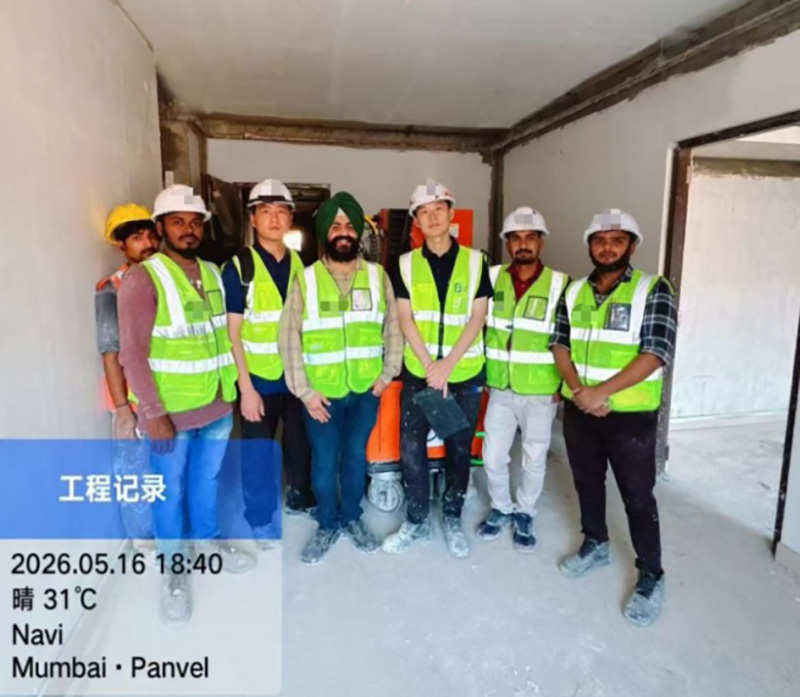
Application Details of Fangshi Robotics
Product Model: Spray-scraping & Sanding Integrated Robot 433D
Process Requirements: Interior wall putty spraying & scraping (2 coats), wall sanding (1 coat), latex paint spraying (1 coat)
Project Progress: Secondary structure decoration underway
Construction Quality: Uniform finish with zero spots or color differences, fully meeting acceptance standards
Construction Efficiency: 5x+ vs. traditional manual labor
Crew Size: 1 robot operator, 1 painter
During operation, powered by its automatic navigation system and omnidirectional chassis, the robot intelligently plans paths and autonomously navigates to designated work stations. It maneuvers flexibly across residential spaces on different floors, effectively resolving the challenges of complex traditional manual processes and difficult multi-crew coordination in India.
For large-area putty spraying and scraping in residential scenarios, the robot completes a 100-square-meter unit in just 80 minutes, whereas manual labor requires 6 to 8 hours per unit. This boosts construction efficiency by 3 to 5 times compared to traditional methods, with construction quality earning unanimous recognition from the client.
Hyderabad Large-Scale Public Building Project
Located in Hyderabad, Telangana, India, this project is a key local public welfare development. The structure comprises 12 floors in total, with clear heights of 4.5 meters for floors 1–5, and 4.2 meters for floors 6–12. To handle the 4.5-meter high-ceiling zones on lower floors alongside the extensive basement scenarios, the project deployed the Basement & Public Building Edition "Spray-scraping & Sanding Integrated Robot 445E".
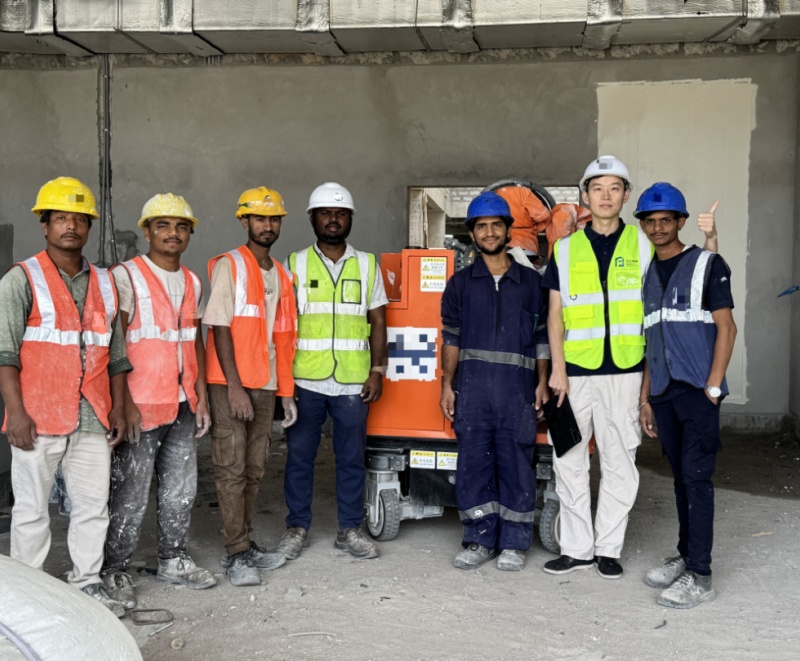
Application Details of Fangshi Robotics
Product Model: Spray-scraping & Sanding Integrated Robot 445E
Process Requirements: Interior wall putty spraying & scraping (2 coats), wall sanding (1 coat), latex paint spraying (1 coat)
Project Progress: Secondary structure decoration underway
Construction Quality: Uniform finish with zero spots or color differences, fully meeting acceptance standards
Construction Efficiency: 5x+ vs. traditional manual labor
Crew Size: 1 robot operator, 1 painter
Traditional high-ceiling wall construction in India relies heavily on manual scaffolding, posing high safety risks for high-altitude work. Furthermore, due to high physical labor intensity, manual construction quality varies significantly, leading to slow project acceptance and progress.
The deployment of this robot not only eliminates the safety hazards of working at heights but also substantially reduces labor intensity. Whether handling standard ceiling heights above the 5th floor, high-ceiling layouts below the 5th floor, or basement spaces, the robot achieves full-floor coverage thanks to its 4.5-meter robotic arm. Operating with millimeter-level precision, the robot ensures wall flatness that far exceeds industry standards, effectively preventing common quality defects such as cracking and hollow spots.
Powered by Fangshi Robotics' intelligent wall coating solution, the overall project timeline is expected to be reduced by 50%. This delivers robust technical support for the high-quality completion of local public infrastructure, demonstrating the immense potential of intelligent construction in complex engineering scenarios.
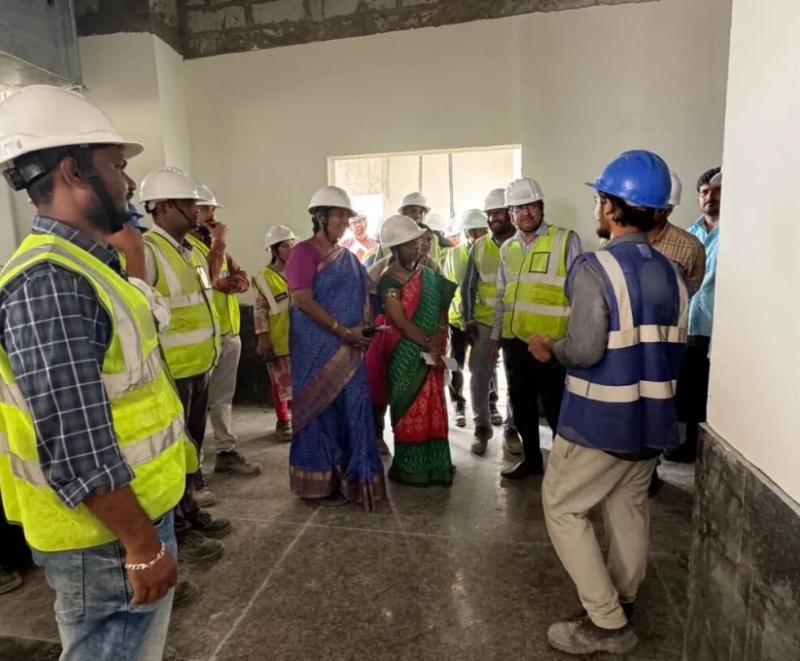
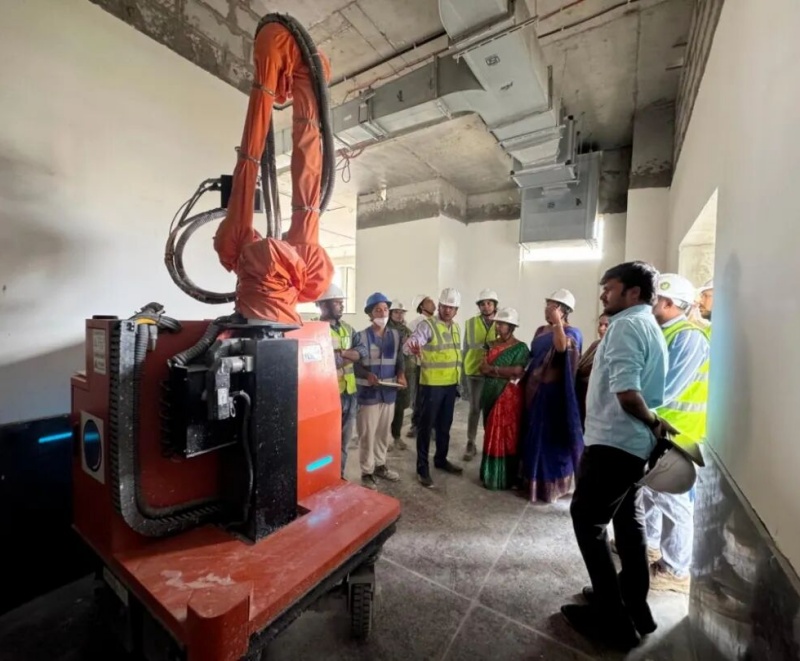
At present, India is actively promoting intelligence and automation in the construction industry. The successful application of Fangshi Robotics attracted on-site visits from local officials, earning high acclaim from both clients and local leaders. The project's success sets a benchmark for intelligent construction across public building scenarios, paving the way for broader application throughout India.
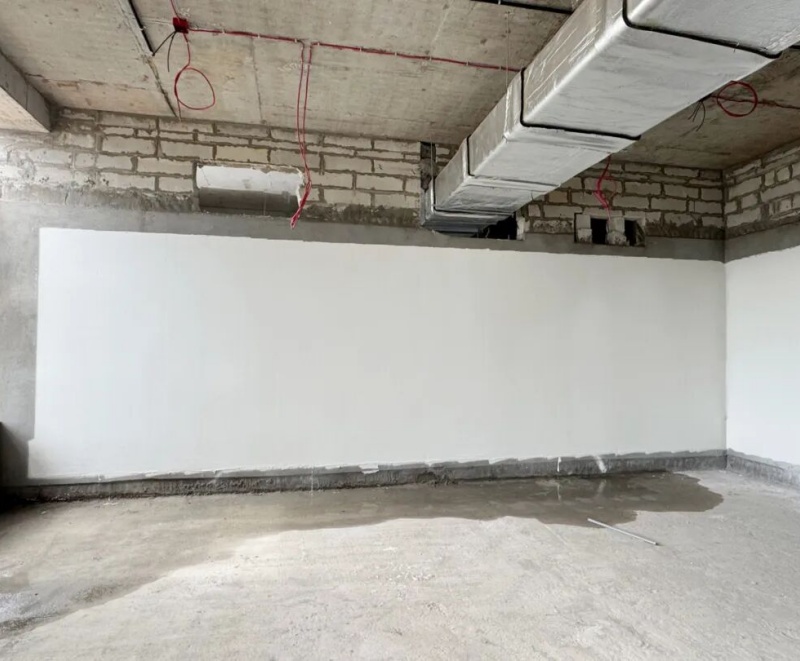
Putty Spraying & Scraping Results
Traditional teams require 6 workers (2 for putty scraping, 2 for sanding, 1 for painting, and 1 general laborer). In contrast, robotic construction requires only 2 on-site personnel: 1 robot operator and 1 painter to assist with material feeding and edge touch-ups. Based on on-site data accounting, using robots reduces labor expenses by over 90%, effectively shortening the delivery cycle of interior coating and aligning seamlessly with the overall project timeline. Across extensive robotic operations, there were zero instances of worker heatstroke or injuries from high-altitude work, significantly enhancing both construction efficiency and job-site safety.
To date, the robots have operated continuously for over 3 months on projects managed by the client, proving their operational stability with a 100% acceptance pass rate, and will continue to be deployed across an upcoming 200,000 square meters of construction. The robots operate with end-to-end autonomous intelligence, ensuring uninterrupted progress on site.
The reliable rollout across these two benchmark projects in India fully validates the adaptability of Fangshi Robotics under high-temperature working conditions and diverse architectural scenarios. Taking these residential and public building practices as templates, Fangshi Robotics will continue to deepen its presence in the Indian market. Leveraging its mature construction robotics product portfolio, the company aims to expand collaborations across commercial, residential, and public interior coating projects—delivering solid Chinese intelligent construction capabilities to support the transformation of India’s construction industry with a safe, efficient, and replicable model.





 Home
Home